


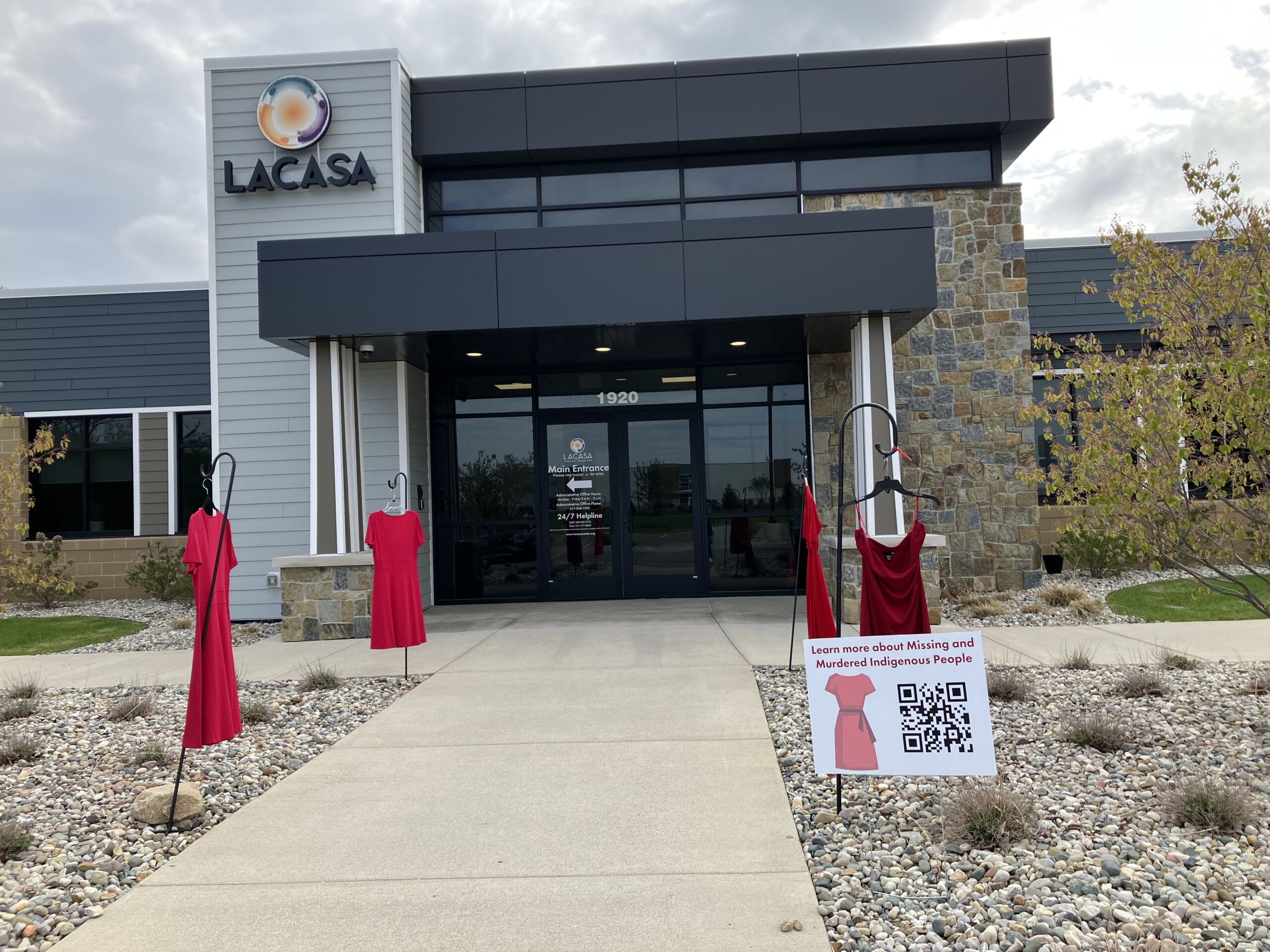
Throughout the month of May, LACASA will host a powerful visual display of red dresses outside its building in honor of Murdered and Missing Indigenous People (MMIP) Awareness Month. This year, the agency has expanded the installation, creating an even more visible and impactful tribute to Indigenous individuals affected by violence. The display serves as a poignant reminder of this ongoing crisis and aims to raise awareness within the Livingston County community.
For decades, Indigenous communities have experienced disproportionately high rates of assault, abduction, and murder, more than ten times the national average. Due to complex jurisdictional challenges between local, tribal, and federal authorities, many cases remain unresolved, and perpetrators are often not brought to justice.
According to the National Crime Information Center, in 2016 there were 5,712 reports of missing American Indian and Alaska Native women and girls, yet the U.S. Department of Justice’s federal missing persons database recorded only 116 cases, highlighting significant gaps in reporting and awareness.
“At LACASA, we are committed to ending all forms of violence, and that includes standing in solidarity with Indigenous communities and amplifying the voices of those impacted by this crisis,” said LACASA President & CEO Bobette Schrandt. “Expanding this display and creating additional opportunities for learning reflects our commitment to raising awareness, fostering dialogue, and advocating for meaningful change.”
Red holds deep significance in many Indigenous cultures, often representing life, blood, and the sacred, and is believed by many to be the only color spirits can see. The empty red dresses symbolize those who are missing and the profound absence felt by their families and communities, while the red handprint represents silenced voices. LACASA’s display seeks to bring visibility to a tragedy that has historically been underreported and overlooked.
On May 5, officially recognized as MMIP Awareness Day by Gretchen Whitmer, LACASA staff will dress in red and host an internal seminar to deepen understanding of MMIP and its impact across Michigan and beyond.
Later in the month, LACASA staff will participate in a specialized presentation led by Sandra Pilgrim-Lewis of Uniting Three Fires Against Violence. The session will focus on culturally responsive advocacy and strengthening support for Indigenous survivors of interpersonal violence.
LACASA recognizes the deep historical and contemporary presence of Indigenous peoples in Michigan, the ancestral lands of the Anishinaabek; the Three Fires Confederacy of Ojibwe, Odawa, and Potawatomi nations, among others.
“Significantly, the very land on which our Home for Good stands was dedicated to our organization in a special ceremony before we moved in, underscoring our commitment to serving and respecting all members of our community,” Schrandt said. “This act of remembrance through the red dress display is made even more meaningful given this connection to the Indigenous heritage of this land.”
LACASA encourages community members to learn more about MMIP and engage in respectful conversations that help bring visibility to this issue. Resources and more information about MMIP from the Office for Victims of Crime can be found HERE.